logo1
Mud Buddy Forum                                
logo2
       
logo3
Home
Latest News and Information
Hyper Sport Drive
HD 6000 Twin Carb
New Mini 35
HD Hunter
Mini HD Lite
Longtail Mud Motors
Performance Engine Parts
Performance Centers
Blinds
Gator Trax Boats
Excel Boats
Accessories
On Line Special
Demos and Festivals
Hyper Service Updates
Videos
Testimonials
Hyper Performance
Tiger Propellers
Remote Steer
Customer Slide Show
Scratch and Dent
Customer Photos
Customer Page
Dealers Wanted
Dealer Page
Parts
Warranty
About Us
Contact Us
Order Now
Privacy
nav bottom


Service Update Page

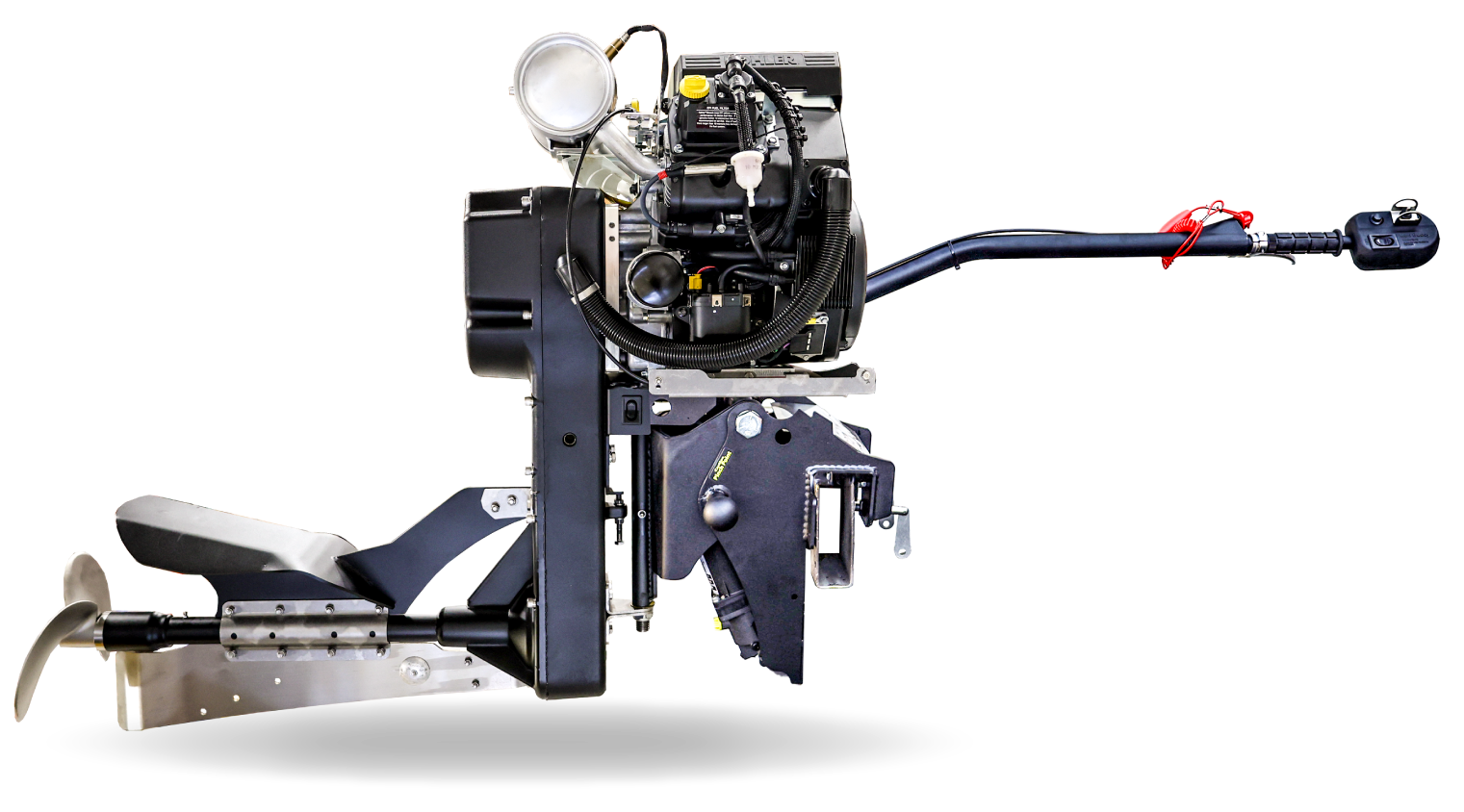
Welcome to the Hyper Service Tip Page.  It is our goal to provide you with updated information about your Mud Buddy Longtail, Hyper Drive, HD Sport, and Mini HD Sports, so you can keep your mud motor and drive in top running condition.  Check here often for service tips.

04 Hyper Prop Sleeve Upgrade:  The sleeve is located between the prop and the lower bearing assembly.  Inspect the sleeve for cracks.  If you have replaced a cracked sleeve in the past, or see damage on your current prop sleeve, call us for an free upgrade, regular UPS. (The original sleeve may have been out of spec and hardened more than required. When you strike an object with the prop, it can split causing seal and bearing collar damage.)

Drive Lubrication:  After 1 year or 50 hours we would like you to grease the lower drive.  Remove the grease hole plug, located on the side of the casting near the drive tube.  Insert a 1/4" X 28 pitch thread grease fitting.  Lube 8 to 10 pumps (no more) of marine grade grease (available at parts store, commonly called marine trailer axle grease).  Replace the cap head screw, do not over tighten.  Warning:  Don't over-grease the drive, in that the drive is sealed and the pressure will cause seal damage and drive failure.  Check again at 200 hours or two years.

Longtail Universal Joint Inspection:  If you hear vibration coming from the universal area of the drive, first check your propeller for wear. Vibration will transmit up the drive shaft and terminate at the universal.  Also check for a bent prop blade or drive shaft.  Also, check the two universal set screws and key to ensure they are tight and in good condition.  More recent models have the drive shaft welded to the universal joint.  You can do likewise by welding a 3/8" bead where the universal meets the drive shaft.  (Not the engine crankshaft) This prevents the drive shaft from loosening and wearing out prematurely.  The weld is easily ground off if the shaft or universal needs repair.

Engine Bolt Tighten:  We have had a few reports of engine bolts being under-tightened.  Take a couple minutes and retighten the engine mounting bolts.  If you check your belt tension, also check the four engine face bolts located behind the clutch, and the four casting slide bolts located under the engine mount (bolt into main belt casting). If the bolts are removed, add 243 (blue) Loctite to each bolt. 

Engine Oil:  Use 10W-30 synthetic, but not required.  Also, check the engine oil with engine level.  Do not overfill.  This can cause oil to enter the fuel pump pulse line and cause high speed fuel delivery problems.

Fuel Treatment:  Use water-removing fuel additive when the weather turns cold.  When dark, shine a flashlight into the fuel tank and any water drops will show up like small diamonds in the bottom of your fuel tank.  If so, use the fuel additive.  One drop of water in the tank will shut you down...

Electric Clutch Fuse:  HD Sports released in June were fitted with an 8 amp fuse.  Carry an extra in your tool box.  The yellow fuse-holder is located under the plastic side cover on the large block Vanguard motors.  Later models have a square circuit breaker that automatically resets. 

Large Block Vanguard Cold Weather Operation Tip:  The large block Vanguard can have icing problems when temperatures drop below 20 degrees.  If you have a flat panel air cleaner model Vanguard, you can rotate the cover intake nozzle around to the muffler side and draw warm air from the top of the muffler.  This will prevent carb icing.  When warmer weather returns, rotate the intake to the side where it can draw cool air.  See cold weather operation tips.

Belt Tension Tip:  It is very important for you to take a few minutes and check your belt tension.  It is a simple process.  See your owner's manual.  We have a belt tension kit available for $19.  Call 801.352.8011 to order.  Hyper and HD Sport Belt Tension and Replacement

Honda Spark Plug Update:  Dec 2004 - Honda has advised us that performance can be increased by using a certain brand of aftermarket spark plugs.  When conducting normal service, check your plugs for excessive carbon.  If so, replace with NGK BPR2ES plugs which run a little hotter.

Carb Icing (Van and Kohler):  Dec 2004 - If you run on rivers or lakes when the temperature is below 20 degrees you may experience carb icing.  Symptoms include black smoke, fuel use increase and considerable power loss.  We have kits for both the Kohler and large block Vanguards which draw warm air from the muffler shell into the carburator.

Warranty Parts and Parts Shipment Policy:  We will gladly assist you in getting replacement parts.  It is not necessary to travel to a dealer to order a warranty part or have someone verify the breakage, etc.  You can call MB direct for home shipment of parts.  In some cases, we will get a credit card from customers to ensure return of broken parts that must go back to the manufacture in order for them to warranty the part.  Shipment is limited to regular UPS ground.  Overnight, two day and three-day select are customer options which are paid for by the customer.   If you need to contact a local engine repair facility click here for a convenient locator.

Outdrive Drain Screw:  Check your outdrive moisture drain screw (located on lower end of outdrive casting) annually.  If you detect any moisture in the drive, bolts located on the lower end of the outdrive may have vibrated loose and are allowing water to enter the drive.  Take a few minutes and seal the rear outdrive mounting bolt threads and transom saver bar bolt threads with Permatex or another type of thread sealer.  The mounting bolts are located  above the transom saver main casting mount.  Remove only one bolt at a time, seal and replace.  Tighten snuggly.  Call if you need assistance.    801.352.8011 or  email 


Remove the screw located on the bottom of the
casting to check for moisture in the drive.  The
transom saver bolts shown here on the bottom
rear of the casting and four large bolts above the
transom saver can be taken out one at a time
and resealed.  Do not remove more than one
of the 9/16" bolts at a time.  These bolts maintain
drive belt tension.


Muffler Bolts: Take a few minutes and check your muffler bolts.  We have had reports of the Vanguard lower two muffler bolts coming loose.  Add a lockwasher to the bolt or loctite them in place.  Check often.  If you have lost  a muffler bolt they are 8mm X 1.25 X 20mm long on the lower two bolts and the four flange bolts are 8 X 1.25 X 25mm

Rock/Sand Shoe Suggestion: September 2004 -  Provides better prop protection when running in rocky rivers and lakes.  Install a 1" X 1/4"  X 12" flat bar.  Mount  with two 1/4" stainless bolts.   Rock bar kits are available for $18 plus shipping. Note, we have a new rock shoe that is 1/4" stainless thick and 2" wide.  Great protection from rocks.  Call 801.352.8011 for details and pricing.


Or, order this new part.   

Squeeze Grip Position Adjustment:  If you travel long distances or drive with winter gloves, it is easier to maintain throttle by loosening the set screw and rotate the squeeze grip 45 degrees downward. 

Squeeze Grip Throttle Adjustment Tips:  Put an elastic band or wire tie around the throttle lever so that it is locked against the grip.  Loosen the throttle adjustment clamp at the end of the cable and gently pull the throttle cable out until the throttle lever, near the end of the throttle wire, hits the stop screw or is as far as it can go.  Do not pull to hard.  Tighten the throttle cable clamp down firmly.  Start the engine and you may now have to adjust the idle.  The idle set screw is always located on the side of the carburetor.  Track down the linkage and you will find it on the carb.  Adjust as needed.  (Never, and I mean never, adjust the governor high speed stop or tabs without checking with us or an authorized service center.  The engine should not exceed 3850 rpm out of the water. 4000 rpm for 29-35 Vans) 

Storage Tips:  If you want to keep your mud motor in top condition, follow these simple storage instructions.  Storage means over 60 days.  Add fuel stabilizer to the tank (available at any auto parts store), run the engine for at least 4 minutes, then disconnect the fuel line and run the engine out of gas.  

High RPM/Governor Adjust Tips:

The most common PM questions I get concern RPM, props and throttle adjustment.

The question really is, can I make my mud motor go faster.

Chances are, you probably can. I haven't seen one yet that we can't make go faster for under $200 and many times do it for nothing. Self help is best.

Longtails with lever style throttle.

Set the friction adjustment screw to hold your throttle wide open. Have someone hold it open, if necessary.

Loosen the throttle cable clamp located by the muffler. Pull gently until the throttle lever hits its stop. In many models this is a high speed governor adjustment screw or fixed bracket. Tighten the cable clamp snug. Do not over tighten.

Start the engine, let idle for one minute and then run wide open. Check tach for 3850 to 4000 rpm depending on the manufacture engine spec requirements. Most can be run at 3900.

If the engine does not run at least that high, you will need to adjust the governor. Now this gets tricky and why many manufacturers prefer not to give any more advice.

As long as you do not run more than 4000 rpm out of the water, the only way you can screw up a governor is by not tightening the adjustment screw causing it to loosen and over-rev later.

Here goes. The governor is connected directly to the butterfly lever on the carburetor. The throttle you use is connected to the governor by a governor spring. The governor isn't magic and doesn't control your life, however, without adequate pull by the throttle through the spring, its objective, to slow down the engine can limit your max RPMs.

So, we want to exert more pull than the governor, thus controlling top speed RPM out of the water. I will talk about how that relates to the in-water, under-load speed later.

The governor either has an adjustment screw or a tab. The adjustment screw obviously moves the stop allowing the throttle to pull further on the spring, or a tab that does likewise. Many Vans have a tab, Kohler and Kawi, have a screw. So adjust the screw or tab to pull further or harder on the governor spring. Each time, incrementally. Check the RPM, each time doing so more carefully to ensure you don't over adjust and cause over-revving problems. If this doesn't work, there is another option.

The Governor Spring: The governor spring on your mud motor is designed to exert a set amount of pull on the governor. Most springs are color coded reflecting what RPM they allow the engine to achieve. You can get a new spring if one is old and stretched, or replace it with a color code that is stiffer with more RPM.

Governor Spring Arm: The governor spring on most motors is connected to the governor arm or throttle arm. There is normally more than one hole to connect the governor spring. When we can't get an engine to the desired RPM, we move the spring out further on the arm to another hole, thus providing more leverage.

With this knowledge you can adjust your governor for the performance your manufacture intended.

Governor and in-water performance. The governor when properly adjusted has nothing to do with how fast the motor runs in the water. However, there are exceptions and a simple test, provided the engine under load is running less than 3900. (But, first be safe, be in open water, have full control of your motor and be familiar where the carburetor throttle linkage is located.) (This test is not subject to motor type, boat type, load, elevation, or any other conditions.) With the throttle wide open, and RPMs running lower than 3900 RPM, reach around and press the carburetor butterfly arm or governor linkage and see if there is any additional throttle left. Visually, you might be able to see the throttle arm pegged out on its stop or not. If there is throttle left, replace the governor spring and/or give us a call for help.

When all this is done, then we fine tune the propellers for a given load. We can talk about this later.

Hyper - The twist or squeeze throttle both adjust the same as above, except most of the Hyper motors run at 4000 RPM by design.

Tip: While you are adjusting the throttle cable in step one, add a fingertip of grease to the cable near the cable sleeve, and tie the cable up on any part of the motor so it is higher than cable end. This will keep water out of your throttle cable and prevent freezing later on.


Copyright 2009  - Mud Buddy Outdoors          Privacy | Home | Contact | Order Now    801.352.8011